A New Dawn at Raca's Farm: From Cages to Open Ground
บล็อก
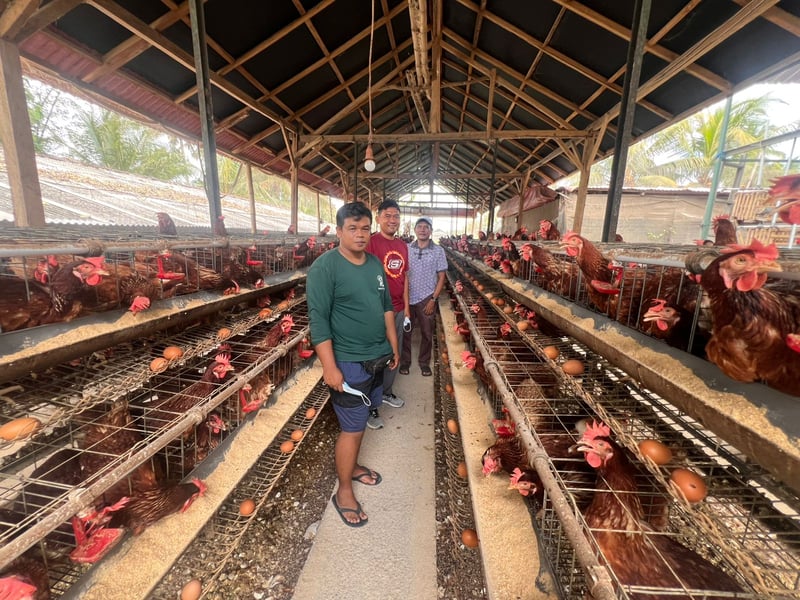
In Timpag Village, Tabanan, rows of battery cages have long stood at Raca's Farm. This is where I Nyoman Karmana built his livelihood as a layer poultry farmer.
For years, his 8,000 chickens lived inside narrow wire compartments, the standard setup he'd always assumed was the only route to a viable business. But behind the constant clucking of the flock, something had started to unsettle Pak Nyoman and his wife.
A small experiment
Curious to see what else was possible, Pak Nyoman set aside a small section of the farm to trial a cage-free system, starting with just 200 chickens. Watching them stretch their wings, dust-bathe and move freely gave him a kind of satisfaction he hadn't expected.

The trial went well enough that he expanded it, adding another 850 birds. They were healthy and thriving, though Pak Nyoman still wasn't sure where this was heading, until a meeting changed things.
Meeting Awatara
On 9 May 2026, Pak Nyoman met Dr Karang from AWATARA. Over dinner in Denpasar, they talked through the story of Ulu Farm, an example of sustainable agriculture that showed humane treatment and commercial success aren't mutually exclusive.
Two things stood out from that conversation:
- Pasture-based systems don't need huge capital if run within a well-managed, nature-friendly cycle
- There's a real market for eggs from "happy chickens", one that pays more, and more consistently, than the standard commodity market
A farmer's regret
Listening to this, Pak Nyoman's assumptions about the industry began to fall apart. Thinking about the 8,000 chickens still in cages weighed on him.
"They have done absolutely nothing wrong, yet I have imprisoned them for their entire lives," he said.
He'd come to see that the old system caused real stress to his birds, and that in the end it only bought him cheap eggs in a volatile market. He felt grateful to have met AWATARA, and to have found a way out of a system he'd never really questioned before.
What's done can't be undone, but the future of the farm was still his to shape. So he made the decision: the existing battery cages would keep running only until they reached the end of their working life, then be retired for good. From here, Raca's Farm is putting its full effort into a free-range system, with a plan already drawn up to scale it to 6,000 birds.
Following technical mentoring from AWATARA, the farm is now working through a phased transition, retiring cages as they age out rather than all at once, while building up its free-range production to meet growing demand for welfare-friendly eggs. It's a small but concrete example of what the right kind of support can do for both animals and livelihoods.