Behind Egg Labels: Understanding Chicken Farming Systems from Caged to Free-Range
บล็อก
When shopping for eggs or chicken products, you may have noticed labels such as battery cage, cage-free, or free-range on packaging or restaurant menu. But what do these terms actually mean?
These labels offer a glimpse into how hens are raised—from the spaces they live in to the care they receive every day. As consumers become more conscious of where their food comes from, food choices are no longer based solely on taste, nutrition, or price. Increasingly, people are also considering animal welfare, sustainability, and responsible farming practices.
This growing awareness has sparked important conversations about higher-welfare farming. More consumers are choosing products that align with their values and support better living conditions for farm animals.
By understanding the different farming systems, consumers can make informed choices that reflect what matters most to them—while also encouraging a more responsible future for food production.
Battery Cage System
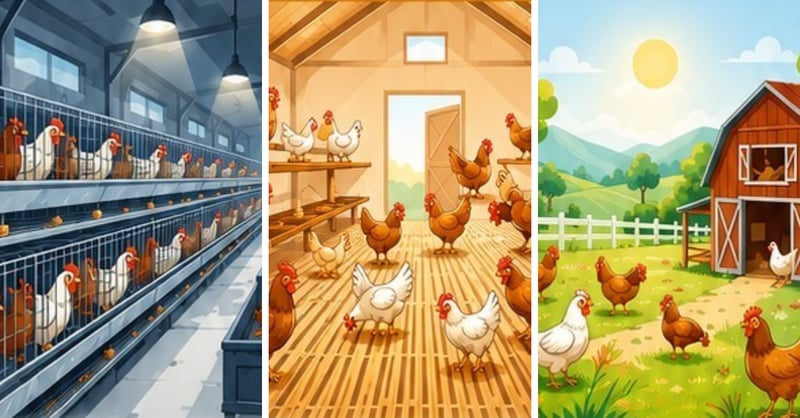
The battery cage system is one of the most intensive forms of poultry farming. In this system, hens are housed in small wire cages inside large indoor facilities. For many years, battery cages have been widely used because they help maximise production efficiency and keep poultry products affordable and accessible to consumers.

However, as awareness of animal welfare grows, and more people are asking important questions about how farm animals are raised and whether their living conditions support their well-being.
In battery cage systems, hens typically have very limited space to move around. This means they are often unable to perform many natural behaviours, such as perching, nesting, wing-flapping, scratching the ground, dust bathing, or simply walking freely. In addition, these systems usually rely on artificial lighting, which means the hens have little or no access to natural daylight. This can limit their natural behaviours and ability to experience a more natural environment and to perceive normal day–night cycles.
Long-term confinement can also contribute to physical health concerns, including weaker bones due to limited exercise, foot problems caused by wire flooring, feather loss, and stress-related behaviours. In crowded environments, hens may experience frustration, boredom, and social stress, all of which can affect their overall welfare.
Because of these concerns, animal welfare organisations (World Animal Protection) and many consumers are encouraging a shift toward farming systems that provide hens with more space, greater comfort, and opportunities to express natural behaviours.
Cage-Free System
The cage-free system offers hens more freedom compared to traditional battery cages.

In cage-free farms, hens are raised indoors but are not confined to individual cages. Instead, they live in shared barn environments equipped with areas for nesting and laying eggs, perches, and spaces where they can scratch, explore, and dust bathe.
While hens remain inside the barn, they are able to move around much more freely and engage in a wider range of natural behaviours. The additional space and environmental enrichment can help reduce some of the physical and behavioural challenges associated with cage confinement.
For this reason, many consumers view cage-free farming as a more welfare-friendly option. It strikes a balance between improved animal welfare and the controlled indoor conditions that support farm management, hygiene, and production efficiency.
Free-Range System
The free-range system gives hens access to both indoor housing and outdoor areas.

Rather than being confined indoors, free-range hens can move between barns and outdoor spaces, allowing them to experience a more natural environment. This provides opportunities for behaviours such as walking, foraging, scratching, dust bathing, and exploring their surroundings.
Access to outdoor areas encourages physical activity and environmental stimulation, both of which can contribute positively to the hens’ overall well-being.
However, free-range farming also comes with its own challenges. Farmers must carefully manage outdoor spaces, maintain good hygiene standards, provide adequate shelter, and protect hens from predators, extreme weather, and disease risks.
When managed responsibly, free-range systems can offer some of the highest levels of welfare by allowing hens greater freedom and choice in how they interact with their environment.
Why Consumers Matter
Every purchase we make sends a message about the kind of food system we want to support.
As consumer interest in animal welfare grows, farms, retailers, and food companies are responding by improving farming practices, increasing transparency, and offering more welfare-friendly products.

Today, many people want to know more about how their food is produced. Higher-welfare farming systems aim to provide chickens with better living conditions, more space, and greater opportunities to express natural behaviours, all factors that contribute to better overall welfare.
Of course, there is no one-size-fits-all answer. Some consumers prioritise affordability, while others place greater emphasis on animal welfare, sustainability, or environmental impact. What matters most is having access to clear information that allows individuals to make choices that align with their own values.
Looking Beyond the Label
Understanding the differences between battery cage, cage-free, and free-range farming systems empowers consumers to make more informed food choices.
As awareness of animal welfare and sustainable food production continues to grow, so does the demand for farming practices that provide better living conditions for hens while supporting responsible food production. Whether affordability, animal welfare, or sustainability matters most to you, understanding how food is produced is an important step toward making choices that align with your values.
By looking beyond the label, consumers can help encourage greater transparency, support higher welfare standards, and contribute to a food system that benefits animals, farmers, and communities alike.
