From Philippines Chicken Farms to Mekong Shrimp Ponds: Southeast Asia is Rewriting the Future of Farmed Animal Welfare
บล็อก
Every day in Southeast Asia, millions of farmed animals live in conditions that cause them immense suffering — confined in spaces so small they can barely move, denied any expression of natural behaviour, their bodies routinely contaminated with antibiotics.
They are out of sight and out of mind, reduced to commodities on a plate. Somewhere along the way, we have forgotten something fundamental: they are sentient. They can feel pain. They can feel joy.
The Reality on the Ground
To understand what’s at stake, we need to look at what is actually happening in each country. In Indonesia, the government is currently rolling out a national Free Nutritious Meal (Makan Bergizi Gratis/MBG) programme to provide free meals to students at all educational levels. While it appears to be a beneficial initiative, it also increases the demand for industrial farm expansion. The plan involves expanding poultry farming and importing large numbers of dairy and beef cattle to strengthen the domestic supply. When food policies are developed without considering animal lives, animal welfare is often overlooked.
In Viet Nam, the situation for farmed animals is worsening. JBS — the world's largest meat producer — recently announced a US$100 million investment to build two factories in the country, expanding its industrial farming footprint into Southeast Asia. This threatens not only animal welfare, but also the environment and public health, raising serious concerns about pollution, disease risk, and antibiotic resistance.
These are only two examples. Across Southeast Asia, similar threats are forming and are driving the expansion of industrial farming. They demand our attention.
Something is Stirring
You might feel disheartened after learning all of this. But something is changing. Something is stirring in Southeast Asia — and it starts with the people who refuse to look away.

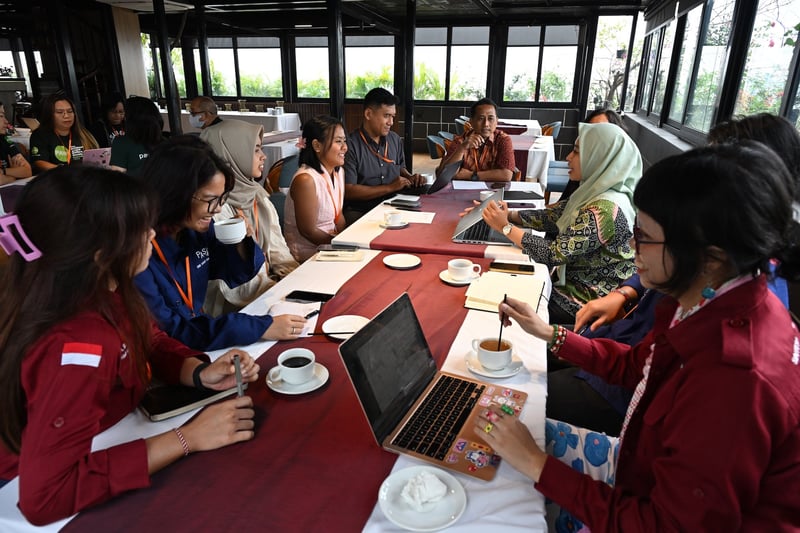
This March in Hanoi, 30 participants from 11 local nonprofit organisations in Indonesia, Thailand, the Philippines and Viet Nam came together with World Animal Protection for the Investing in Others Regional Workshop 2026. In addition, we held a series of Roadshows in each country, meeting with organisations that are interested in, or already working on, farmed animal welfare to discuss potential opportunities for funding and collaboration. We gathered not just to reflect on progress and exchange practical lessons, but to lay out a bolder strategy for what comes next — a food system that is humane, sustainable, and just.
Change is Already Happening
Over the course of three days, in one room with one goal — to improve farmed animal welfare — conversations turned to what is working, what remains challenging, and where collective action can make the greatest difference for animals. Participants shared experiences from across the region: from influencing national standards and supporting farmers in transition, to strengthening public awareness and building partnerships that last.
Starting with on-the-ground work, the Philippines Animal Welfare Society (PAWS), under the project ‘The Better Chicken Option’, has been running pilot farms to demonstrate welfare improvements such as better housing and enrichment for meat chickens, while also conducting consumer research to show that people are willing to pay more for higher welfare products. These pilots helped convince some companies to adopt improved practices and supported efforts to introduce voluntary certification for restaurants and food providers.

At the same time, HealthyFarm, an initiative under Evergreen Social Ventures, has been working directly with farmers to transition to cage-free egg systems, building a platform that connects producers, businesses, and consumers. Their work focuses on continuous farmer support, market development, and partnerships to ensure that higher welfare practices can be sustained beyond individual projects.
The work spans the entire food chain — from the farm to the policy table to the public. The Tambuyog Development Centre (TDC) has successfully influenced the inclusion of animal welfare considerations in the Philippine National Standards for shrimp and milkfish farming, helping to establish a policy foundation for aquatic animal welfare. Meanwhile, the Centre for Marinelife Conservation and Community Development (MCD) has been developing technical guidelines and proposing policy roadmaps to strengthen welfare practices in aquaculture in Viet Nam, working with government and farming communities to align welfare improvements with national standards and sustainable aquaculture development.

Without awareness, the action won’t happen. The Yayasan Lembaga Konsumen Indonesia (YLKI) focuses on strengthening consumer awareness by linking animal welfare to food safety, consumer rights, and responsible production through public campaigns, workshops, and media engagement. With a unique approach, Perkumpulan Ayam Sejahtera Indonesia (PASI) builds awareness among youth and mothers through education and partnerships, encouraging more informed choices and supporting higher-welfare farming practices.
Progress is Real, but So Are the Obstacles
One of the hardest lessons shared by organisations working on farmed animal welfare was watching corporates walk back on their commitments to use higher-welfare products — particularly in the hospitality sector. Commitments are made but not always followed through on. This is where the wider community has a role to play: consumers, advocates, and civil society must collectively hold companies publicly accountable and demand transparency on their welfare promises. Policy changes at the local, national, regional, and global level also level the playing field and ensure long-term improvements.
Working across sectors with diverse stakeholders can be time-consuming, particularly when partners have very different levels of awareness and start from different priorities. Finding common ground takes patience, trust, and sustained effort.
Even when people understand the problem, turning awareness into action remains difficult. Participants acknowledged that raising awareness alone is not enough — whether through consumer choices, policy support, or changes in farming practices, translating understanding into concrete action remains one of the most persistent challenges across the region. However, thanks to the efforts of our partners under the Investing in Others programme, as well as wider civil society efforts, we are seeing progress with animal welfare now in people’s hearts and minds, and tangible change on the ground.
What's Next for Us?
For partner organisations, the insights, tactics and outcomes of the workshop will shape and strengthen their work in the months ahead. By creating a broader, aligned network, which we have called FANSEA (Farmed Animal Network Southeast Asia), we will amplify these efforts, proving to the world that change is already underway — and that it starts here, in Southeast Asia.
Learn more about FANSEA: https://www.worldanimalprotection.or.th/our-work/farmed-animal-network-southeast-asia/
Follow FANSEA on LinkedIn: https://www.linkedin.com/company/farmed-animal-network-sea