Improving Animal Welfare in Aquaculture: How Tambuyog Is Advancing Milkfish Farming in the Philippines
บล็อก
According to the 2024 edition of The State of World Fisheries and Aquaculture (SOFIA) [1] from the Food and Agriculture Organisation of the United Nations (FAO), global fisheries and aquaculture production has reached a new peak. For the first time, aquaculture is producing more aquatic animals than capture fisheries.
In 2022, global fisheries and aquaculture production reached 223.2 million tonnes, with aquatic animals accounting for 185.4 million tonnes. Asia continues to lead this growth, contributing 75 per cent of global production and producing the majority of the world’s aquatic animals.
In the Philippines, milkfish remains the top aquaculture species, and production is expected to increase as food demand grows.
As aquaculture continues to expand, the question is no longer only how much fish we produce, but how responsibly we produce them.
Bringing animal welfare into everyday aquaculture practice
Tambuyog Development Centre, a fisheries-focused organisation in the Philippines, is working to ensure that animal welfare becomes part of everyday aquaculture practice. Through its ‘Milkfish Welfare Project’, Tambuyog collaborates with farmers, communities, and government partners to translate animal welfare principles into clear and practical standards for milkfish farming.

The project focuses on raising awareness among farmers, government agencies, and supply chain actors, while also promoting the inclusion of animal welfare standards in national aquaculture policies.
Tambuyog has been working with partners in the fisheries sector for several years, building on earlier efforts to improve shrimp welfare. The organisation began its dedicated work on milkfish welfare in 2024, marking the start of the current Milkfish Welfare Project.
What animal welfare means for farmed fish
Animal welfare in aquaculture refers to how fish are cared for throughout their lives.
For milkfish, good welfare includes:
- maintaining healthy water conditions
- providing proper nutrition
- handling fish gently
- managing stocking density responsibly
When these conditions are not met, the effects on fish can be immediate. Poor water quality, overcrowding, and stressful handling can weaken fish health, increase disease risk, and increase mortality.

These challenges not only affect the animals. They also increase farmers' production risks and may lead to greater reliance on drugs and chemicals.
Turning animal welfare principles into daily farming practices
Tambuyog works closely with farmers and government partners to translate animal welfare principles into practical steps that can be applied on farms.
One critical stage in milkfish farming is the handling of fry and fingerlings. At this early stage, proper screening and transport conditions help ensure that fish are healthy before they enter the farm system.
Farmers are encouraged to:
- transport fry in oxygenated containers
- follow recommended stocking densities
- allow fish time to adjust to new water conditions
- separate batches from different sources to reduce disease risk
During the grow-out phase, maintaining water quality and consistent feeding practices helps reduce stress and prevent disease.
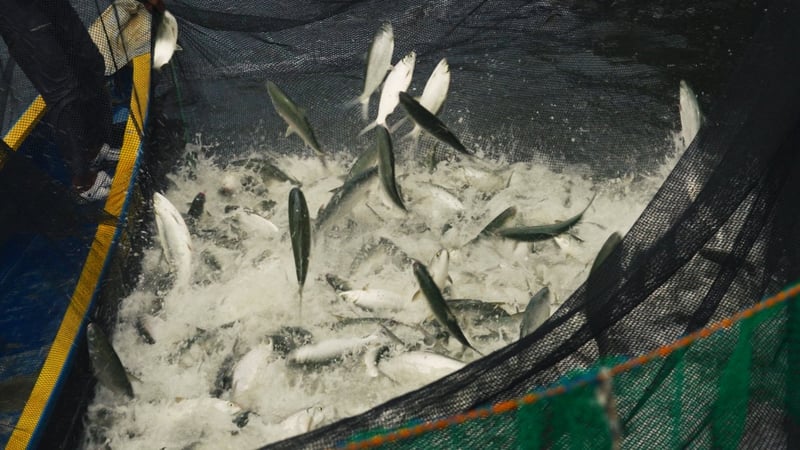
At harvest, careful handling is essential. Fish should be moved calmly and supported with adequate oxygen to reduce injury and maintain their condition.

These practices demonstrate how animal welfare can be integrated into routine farm management.
Strengthening national standards for aquaculture
Beyond farm-level practices, Tambuyog is also working to strengthen national policies that support animal welfare in aquaculture.
The organisation participates in technical working groups reviewing the Philippine National Standards for Good Aquaculture Practice, advocating for the inclusion of broader animal welfare requirements.
This includes measures related to:
- biosecurity
- quarantine procedures
- stocking practices
- fish handling and harvesting
The goal is to ensure that animal welfare becomes a standard part of aquaculture regulation rather than an optional practice.
The revised Philippine National Standards (PNS) for Milkfish and Tilapia were officially approved in the third quarter of 2025, marking a significant milestone for integrating animal welfare into national aquaculture standards.
The farmer perspective: managing daily challenges
Improving animal welfare in aquaculture also depends on the realities farmers face daily. Maintaining water quality, for example, can be difficult when environmental conditions are beyond a farmer’s control.
“The most common challenge in our aquaculture business is maintaining stable water quality. This is often affected by garbage being dumped directly into the river. The most important government support we need is the full implementation of good aquaculture practices, including the Animal Welfare Act. We are committed to continuing these standards on our farm.” Marc Trillana, Founder of Khay-Kim Milkfish Farm
Tambuyog works closely with one pilot farm, Khay-Kim Milkfish Farm, to provide guidance, training, and information on good aquaculture practices and animal welfare standards.
The potential impact on farmed animals
Milkfish production in the Philippines remains one of the largest in the region.
In 2024, production reached approximately:
- 361 thousand metric tonnes
- around 722 million fish annually
This scale highlights the potential impact of improving welfare standards across the aquaculture sector.

Even small changes in farming practices can benefit a significant number of animals while also improving farm productivity and food safety.
Looking ahead: responsible aquaculture for the future
As demand for fish continues to grow, responsible aquaculture will play an increasingly important role in food systems.
Tambuyog’s work demonstrates that improving animal welfare is not only about protecting animals. It is also about supporting farmers, strengthening food safety, and promoting sustainable aquaculture.

By working with farmers, government agencies, and industry partners, the organisation aims to ensure that animal welfare becomes a normal part of aquaculture practice in the Philippines.
The next phase of the work will focus on expanding information and education efforts across major milkfish-producing regions, sharing learning with partners across Southeast Asia, and strengthening training programmes on the Code of Good Aquaculture Practice (GAqP) with a stronger emphasis on animal welfare.
[1] The State of World Fisheries and Aquaculture (SOFIA)
This article draws on content from Tambuyog Development Centre’s Milkfish Welfare Project video, with additional context provided by the project team.